Date
28 November – 4 December 2026
Venue
Tsinghua University
Haidian District, Beijing, 100084, P. R. China
Format
In-person
Learn from some of the world’s top universities this winter.
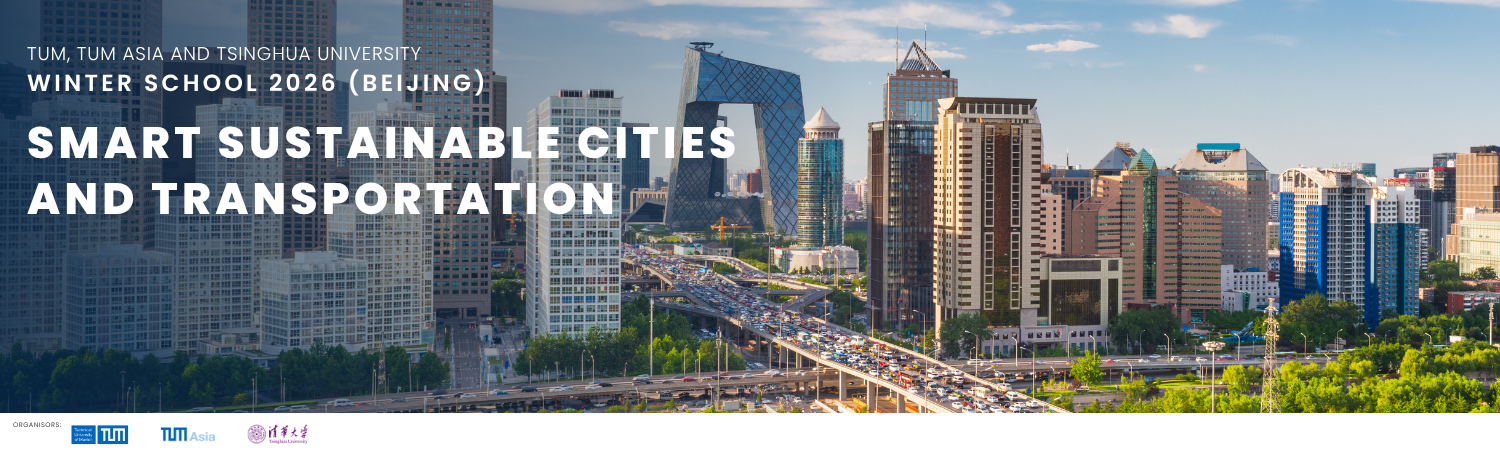
Embark on an exhilarating learning adventure this winter with the exclusive Winter School 2026 (Beijing) conducted two of the top universities in the world. Featuring an exciting line up of professors from TUM, TUM Asia and Tsinghua University.
Comprising of training courses spanning from 28 November – 4 December 2026, this Winter School features a cadre of experts from both universities to present research on Smart Sustainable Cities and Transportation.
Eligibility Criteria
Applications are open to candidates who already hold a bachelor’s degree or who are currently enrolled in a bachelor’s degree programme, in any of the following areas (but not limited): Civil Engineering, Transportation Engineering, Electrical Engineering, Geodetics, Mechanical Engineering, Geography, Computer Science, Communications Engineering, Economics, Mathematics, Physical Sciences, Architecture, Environmental Engineering, Tourisms.
All classes at the Winter School 2026 (Beijing) will be conducted in English. Participants should ensure that they are proficient in English (reading and writing) at university level.
Key Topics
- Smart and green city growth
- Use of geospatial data and geoinformatics to plan and manage smart city development and organize the transport system
- Usage of big data analytics and artificial intelligence
- Usage if drones and robots in city and transport planning and management
- Smart Railway systems and integration of public transport modes
Travel Choices Under Uncertainty And Information Provision
Lecturer: Dr. Zhenyu Yang, Technical University of Munich (TUM), Research Group Leader, Chair of Traffic Engineering and Control
Markets For Sustainable Cities: Tradable Credits In Demand Management
Lecturer: Dr. Anke Ye, Technical University of Munich (TUM), Postdoctoral Researcher, Chair of Traffic Engineering and Control
AI For Transport Resilience And Vulnerability
Lecturer: Mr. Hamza Begic, Technical University of Munich (TUM), Research Associate, Chair of Transportation Systems Engineering
Sustainable Urban Planning Concepts
Lecturer: Dr. Andreas Rau, Technical University of Munich Asia, Faculty Head and Principal Investigator (Rail, Transport & Logistics)
Cycling Policies For A Sustainable City Development
Lecturer: Professor Dr. Yang Xinmiao, Tsinghua University
Transport Planning Theory And Its Development
Lecturer: Prof. Dr. Huapu Lu, Tsinghua University
Autonomous Driving: From Origins To Future Frontiers
Lecturer: Dr. Xianyuan Zhan, Tsinghua University
Discrete Choice Models Through The Lens Of Modern Optimization And Machine Learning
Lecturer: Dr. Baichuan Mo, Assistant Professor, Department of Transportation Engineering, Tsinghua University
AI-Empowered Intelligent Transportation Planning Methods And Applications
Lecturer: Dr. Yuebing Liang, Tsinghua University, Assistant Professor, Department of Urban Planning
Fundamental Traffic Simulation Modelling With VISSIM
Lecturer: Feng XU, Senior Technical Consultant, PTV Software Technology (Shanghai) Co., Ltd.
Admission Criteria
Admission to our Winter School is highly competitive. Selection is based on a comprehensive review of all documents received in the application by the examination board. Candidates will be notified by email as soon as the admission is granted.
Participation Fees
Participation in the Winter School is complimentary and free of charge.
Submission Deadline: 8 November 2026 (Sunday)
Contact Us
If you have any questions regarding the admission procedure, please email us at transportation.vtk@ed.tum.de.
Organised by

Supporting Partner


Upcoming Events
TUM Asia Alumni Connect: Beijing Edition
- In-person | Beijing
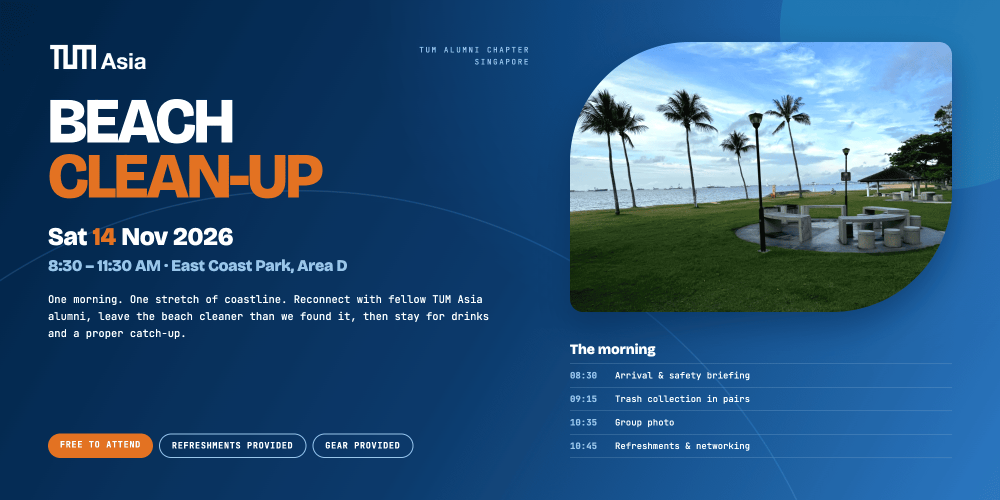
TUM Alumni in Singapore: Beach Clean-Up
- In-person | Singapore
Master of Science Programmes: Admission Webinar Series AY2728
- Online
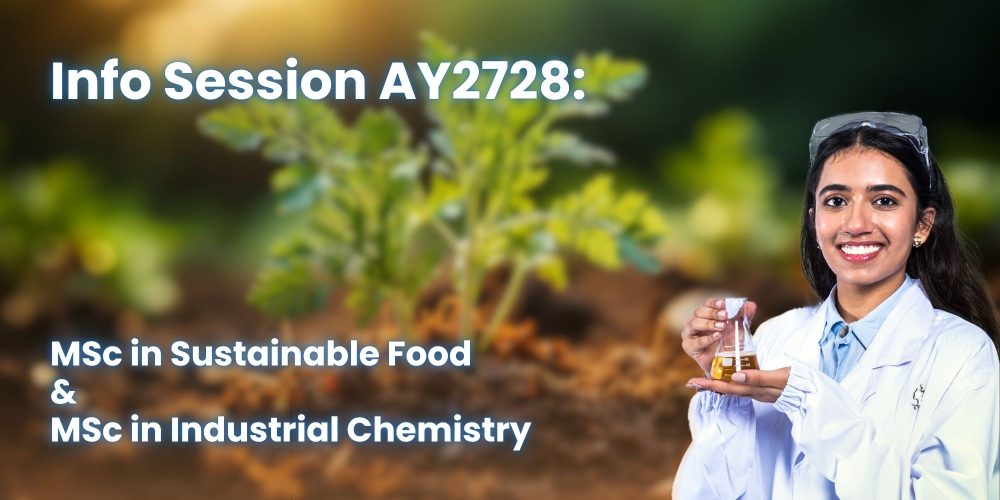
Info Session AY2728: TUM MSc in SF & NUS-TUM MSc in IC
- Online
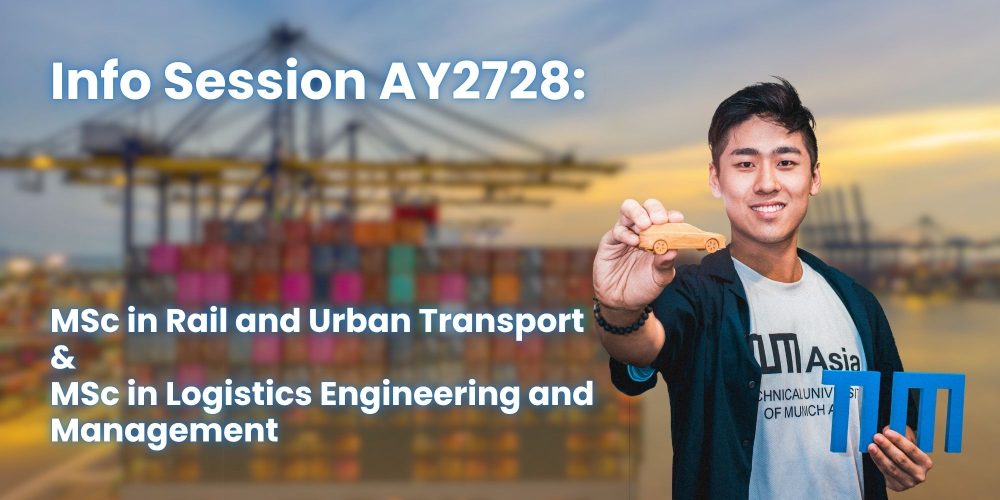
Info Session AY2728: TUM MSc in RUT & TUM MSc in LEM
- Online
Info Session AY2728: TUM MSc in AE
- Online
You May Also Like