
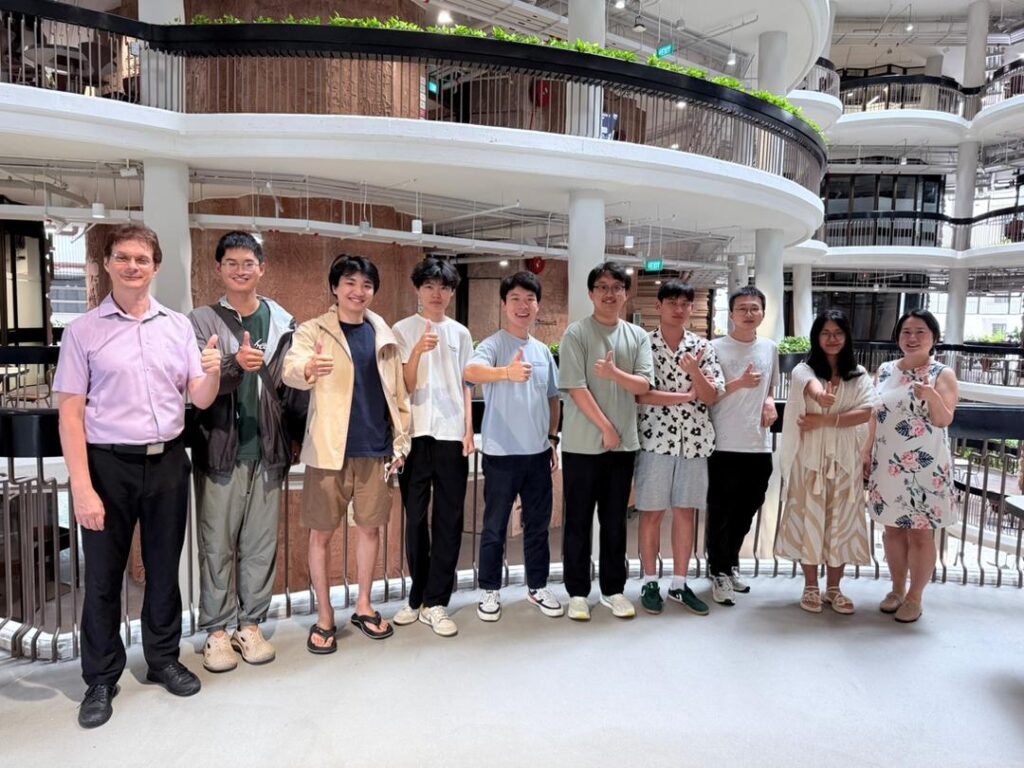
When considering a master’s in Rail and Urban Transport, one key question often comes to mind: Where can this programme really take me?
For Haruhiko Yokota, now a second-year student at TUM Asia, the answer spans continents — from rural Japan to the global policy stage in Paris.
With a background in Urban Systems, Haru’s interest in transport began with a fascination for maps and urban structures. But it was a personal experience that gave his ambitions real direction.
“An elderly family member of mine lives in rural Japan, where public transport options are limited,” he shares. “That made me think about how mobility challenges affect ageing societies — and how I could contribute to solving them.”
With a background in Urban Systems, Haru’s interest in transport began with a fascination for maps and urban structures. But it was a personal experience that gave his ambitions real direction.
“An elderly family member of mine lives in rural Japan, where public transport options are limited,” he shares. “That made me think about how mobility challenges affect ageing societies — and how I could contribute to solving them.”
Why Rail and Urban Transport at TUM Asia?
What stood out most to Haru was the programme’s multidisciplinary nature. “The transport industry isn’t just engineering,” he explains. “It involves business, policy, and coordination between many stakeholders.”
This broader perspective was crucial for someone aiming to make large-scale societal impact. The programme’s unique positioning — a German university based in Singapore — also offered an international learning environment that few alternatives could match.
Like many incoming students, he had concerns before enrolling, particularly about the financial commitment of leaving his job. Receiving the DAAD Scholarship helped ease that transition and allowed him to focus fully on his studies.
What stood out most to Haru was the programme’s multidisciplinary nature. “The transport industry isn’t just engineering,” he explains. “It involves business, policy, and coordination between many stakeholders.”
This broader perspective was crucial for someone aiming to make large-scale societal impact. The programme’s unique positioning — a German university based in Singapore — also offered an international learning environment that few alternatives could match.
Like many incoming students, he had concerns before enrolling, particularly about the financial commitment of leaving his job. Receiving the DAAD Scholarship helped ease that transition and allowed him to focus fully on his studies.
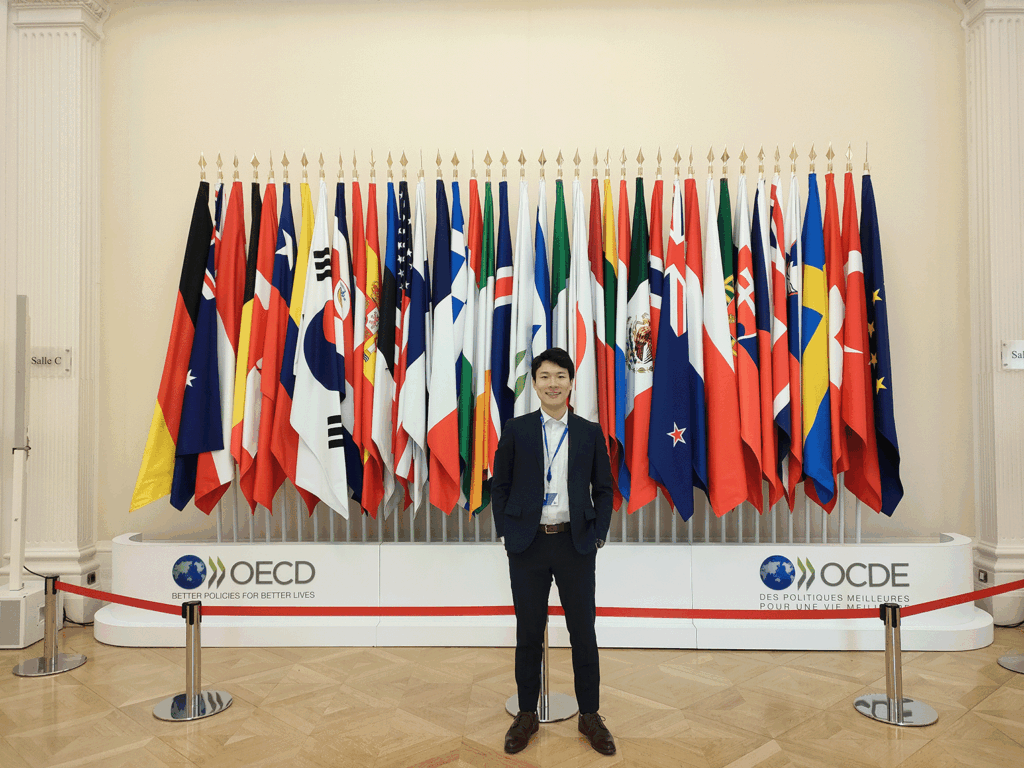
From Singapore to Paris: Internship Journey at the OECD
Haru’s internship journey eventually took him to the International Transport Forum (ITF) under the Organisation for Economic Co-operation and Development (OECD) in Paris — but getting there required clarity, persistence, and reflection.
He applied to around five organisations, focusing on international and public-sector roles that would complement his studies rather than narrow his exposure too early. Each application required a tailored cover letter, which he found demanding but valuable.
“It was a tedious process, but it forced me to think carefully about what I wanted to gain from the internship,” he shares. “Rejections are part of the journey, so I didn’t take them personally.”
After applying through the OECD’s general internship pool, he was eventually matched with an opportunity supporting the ITF Summit — the world’s largest annual gathering of transport stakeholders. His responsibilities include preparing briefings for industry leaders, contributing to discussions on mobility topics such as accessibility, and offering technical insights.
The experience has also immersed him in a highly international and intellectually engaging work culture.
“In my team of 12, there are nine nationalities. Everyone is genuinely passionate about transport — even lunch conversations often turn into discussions about research.”
Crucially, his academic training at TUM Asia has enabled him to contribute with confidence.
“The technical foundation from my studies helped me approach research with more depth,” he explains. “It also allowed me to understand how technical knowledge is translated into policy-making frameworks.”
Expanding Perspectives Beyond the Classroom
Through his internship, Haru gained a much broader view of how the global transport industry operates. While his coursework at TUM Asia focused on technical areas such as infrastructure and system optimisation, the internship revealed how these elements fit into larger policy and decision-making frameworks.
“Transport planning doesn’t happen in isolation,” he explains. “There are many layers behind how projects are initiated and implemented, and policy plays a key role in shaping that process.”
Working closely with stakeholders across the sector also introduced him to organisations and career paths he had not previously considered, expanding the possibilities for his future.
At the same time, the experience deepened his understanding of institutions he once only knew academically. When he first joined TUM Asia, Haru referenced the OECD mainly as a source of global statistics in his DAAD scholarship application. Being part of the organisation has since changed that perspective.
“Now I see the real impact the OECD has in shaping global discussions and policies,” he says — a shift that reflects how his learning has evolved from theory to real-world insight.
Through his internship, Haru gained a much broader view of how the global transport industry operates. While his coursework at TUM Asia focused on technical areas such as infrastructure and system optimisation, the internship revealed how these elements fit into larger policy and decision-making frameworks.
“Transport planning doesn’t happen in isolation,” he explains. “There are many layers behind how projects are initiated and implemented, and policy plays a key role in shaping that process.”
Working closely with stakeholders across the sector also introduced him to organisations and career paths he had not previously considered, expanding the possibilities for his future.
At the same time, the experience deepened his understanding of institutions he once only knew academically. When he first joined TUM Asia, Haru referenced the OECD mainly as a source of global statistics in his DAAD scholarship application. Being part of the organisation has since changed that perspective.
“Now I see the real impact the OECD has in shaping global discussions and policies,” he says — a shift that reflects how his learning has evolved from theory to real-world insight.
Advice for Future Students
For those considering the programme, Haru emphasises curiosity and initiative.
“Start exploring your options early — across different countries and organisations,” he advises. “The more you research, the more opportunities you’ll discover.”
He also encourages students to stay connected to real-world developments.
For those considering the programme, Haru emphasises curiosity and initiative.
“Start exploring your options early — across different countries and organisations,” he advises. “The more you research, the more opportunities you’ll discover.”
He also encourages students to stay connected to real-world developments.
“The industry is constantly evolving. Try to link what you learn in class to what’s happening in reality — that’s where the learning becomes meaningful.”
And perhaps most importantly:
“Enjoy your time in Singapore — you never know where the programme might take you next.”
Interested in shaping the future of mobility? Discover how TUM Asia’s Master’s in Rail and Urban Transport can take you there and start your journey today.