
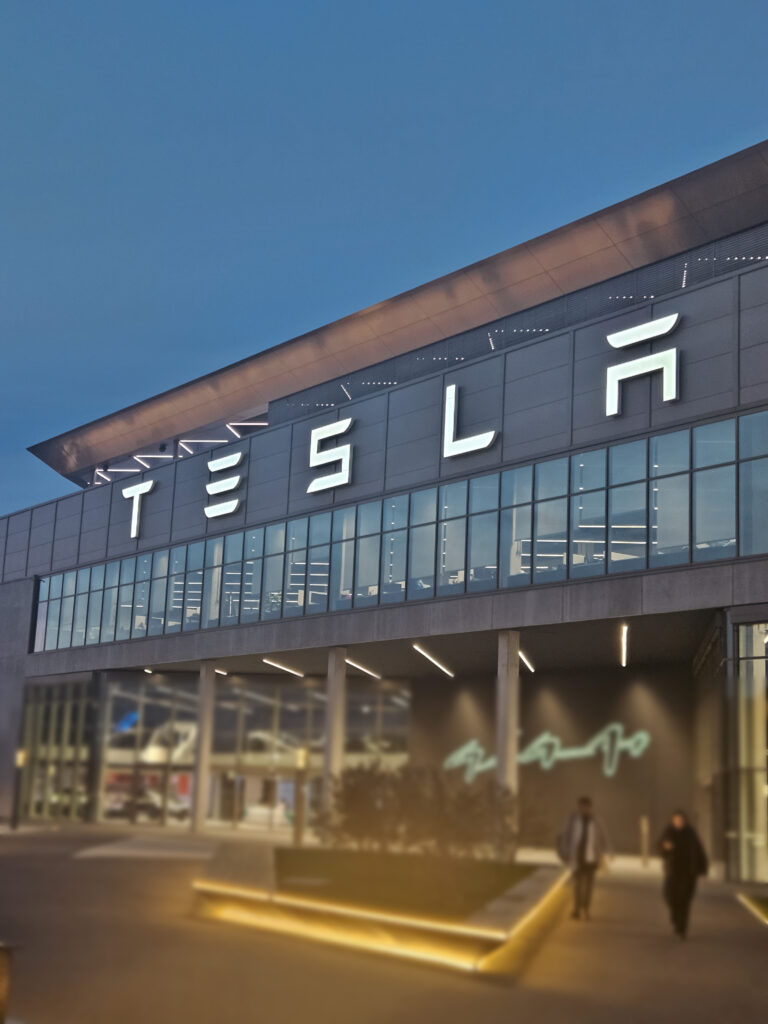
For many students, a master’s degree is not only about academic learning but also about discovering how theory applies in real-world industries. For Weng Jiahuan, a master’s student in Rail and Urban Transport at TUM Asia, this journey led her from studying in Singapore to gaining hands-on experience in Germany’s manufacturing sector.
Through persistence and a strong interest in supply chain operations, Jiahuan secured an internship with Tesla Manufacturing Brandenburg SE in Berlin. The experience strengthened her professional skills and gave her valuable insight into working in an international environment.
Building a Foundation Before TUM Asia
Before starting her master’s programme in 2023, Jiahuan had already developed a strong interest in supply chain management through both research and industry experience.
During her bachelor’s studies, she worked as a research assistant on projects exploring how machine learning algorithms could improve supply chain performance. The experience introduced her to the analytical and data-driven side of logistics.
She also completed two internships before beginning her master’s degree. One was with a manufacturing company, where she gained exposure to production processes, and the other with an ERP software company, where she learned how enterprise systems support supply chain operations.
“These experiences encouraged me to continue developing my knowledge in logistics and supply chains,” she explains. “Pursuing my master’s programme at TUM Asia allowed me to deepen my understanding of this field.”
Preparing for the Internship Journey
Internships form an integral part of the master’s programme, giving students to apply what they have learned in real industry settings.
For Jiahuan, the internship search took about five months. She explored roles in areas such as production planning, supply chain analysis, procurement, purchasing, and logistics management, submitting most of her applications through company career portals and professional platforms such as LinkedIn.
“I followed two main strategies when applying,” she explains. “For some roles, I submitted fast applications using my general CV to apply quickly to a wide range of positions. For roles I was particularly interested in, I customised my CV and prepared a cover letter.”
During the search, she spent one to two hours each day reviewing openings and submitting applications. She also exchanged tips with classmates and seniors at the university, followed discussions on social media, and used AI tools to help refine her CV.
Her application to Tesla followed the customised approach.
“I submitted a tailored application, was invited to interview, and successfully passed the process without too many obstacles,” she says.
Looking back, Jiahuan advises future students to start their search early and remain open to different opportunities, as the application process can take several months.
Internship Experience in Germany
Jiahuan joined Tesla Manufacturing Brandenburg SE in Berlin as a Direct Purchasing Intern. In this role, she supported purchasing activities for automotive components, coordinated with suppliers, analysed procurement data, and assisted with purchasing processes.
The work environment was fast-paced and collaborative, requiring regular coordination across departments and with suppliers.
“It helped me understand how supply chain operations work in real industrial settings,” she explains. “You see how engineers, logistics teams, and supply chain managers collaborate to make decisions.”
The experience allowed her to see how theoretical knowledge from logistics and supply chain management translates into real-world operations.
Experiencing Life and Work in Germany
Beyond professional experience, the internship also offered Jiahuan the opportunity to immerse herself in a cultural environment.
Preparing for the move required organising her visa, securing accommodation, and understanding Germany’s public transportation system, which differs from Singapore’s.
“Living in Germany was a very interesting experience,” she says. “I had the opportunity to explore new environments, meet people from different cultures, and experience life in Europe.”
Although English was widely used at work because the company’s headquarters are in the United States, living in Germany also motivated her to continue learning German. She notes that language skills can be especially valuable for students who hope to work in Germany long-term.
Reflecting on her experience, Jiahuan encourages incoming students to think about their career direction early.
“Some students prefer academic research, while others want to work in industry,” she says. “Understanding your interests early helps you prepare for the kind of experience you want.”
For students interested in industry roles, internships can be especially valuable.
“Stay open to different opportunities and keep developing practical skills. The programme is a great chance to explore which direction suits you best.”
Looking Ahead
Before starting her internship, Jiahuan was unsure whether she wanted to pursue academia or industry. Her experience in Germany helped clarify her interests.