
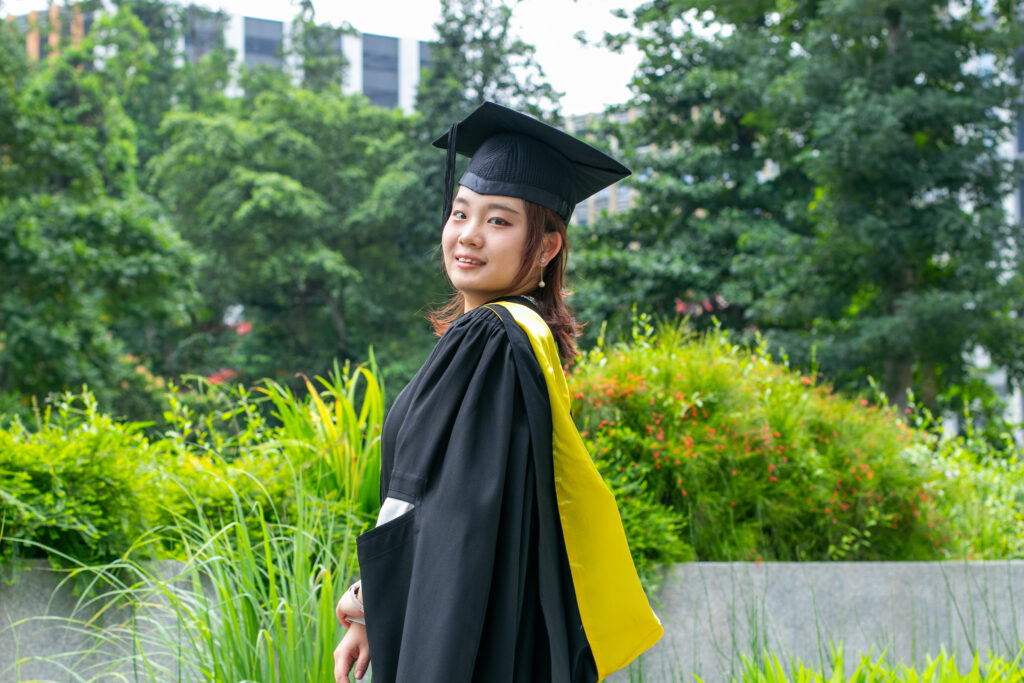
Curiosity, determination and disciplined learning have taken Zhang Meng from a newcomer to semiconductor technologies to an award-winning graduate and Process Integration Engineer.
This year, Zhang graduates from TUM Asia’s Master of Science in Green Electronics programme as the recipient of the Best Student Award—recognition of both her academic excellence and the resilience that shaped her journey.
For Zhang, pursuing a master’s degree was never simply about earning another qualification. It was about preparing herself for one of the world’s fastest-growing industries.
With artificial intelligence driving demand for advanced semiconductor technologies, she saw an opportunity to deepen her expertise while gaining practical industry experience.
“The programme was the perfect entry point for me. It provides comprehensive knowledge of the semiconductor industry, and the compulsory internship allows students to integrate quickly into the real working environment.”
Stepping Outside Her Comfort Zone
Although Zhang had studied Information and Communication Engineering, she entered the programme with limited exposure to semiconductor technologies.
Semiconductor manufacturing, device physics and industry practices were largely unfamiliar territory. Rather than being discouraged, she embraced the challenge.
Through continuous practice, discussions with professors and conversations with industry professionals, Zhang gradually built her knowledge and confidence. Looking back, she considers those early challenges some of the programme’s most valuable learning experiences.
Learning to Think Under Pressure
TUM Asia’s intensive teaching approach left a lasting impression on Zhang. Instead of managing several modules simultaneously, students focus on one subject over a two-week period before progressing to the next.
For Zhang, this structure allowed her to explore each topic more deeply.
The learning also extended beyond technical knowledge. During one memorable Bioelectronics class, students were randomly assigned to teams and given just 30 minutes to prepare and deliver a presentation on biosensor technologies.
The exercise tested their ability to think quickly, evaluate information and work effectively as a team—skills that closely reflect the demands of an engineering workplace.
From the Classroom to GlobalFoundries
Zhang considers her internship at GlobalFoundries the most transformative part of her journey.
Working as a Device Engineer, she conducted benchmarking for Hall-effect sensors alongside experienced semiconductor engineers. Her mentor also guided her professional development and master’s thesis, sharing industry insights, research practices and the latest technological developments.
The experience expanded Zhang’s professional network and affirmed that she had chosen the right career path.
“When I started searching for full-time jobs after my internship and thesis, I realised how valuable the experience had become. Having practical industry exposure helped me adapt quickly and made me much more attractive to employers.”
Today, Zhang works as a Process Integration Engineer at UMC. In the future, she hopes to lead complex semiconductor engineering projects independently—from conception to completion.
The Habits Behind the Award
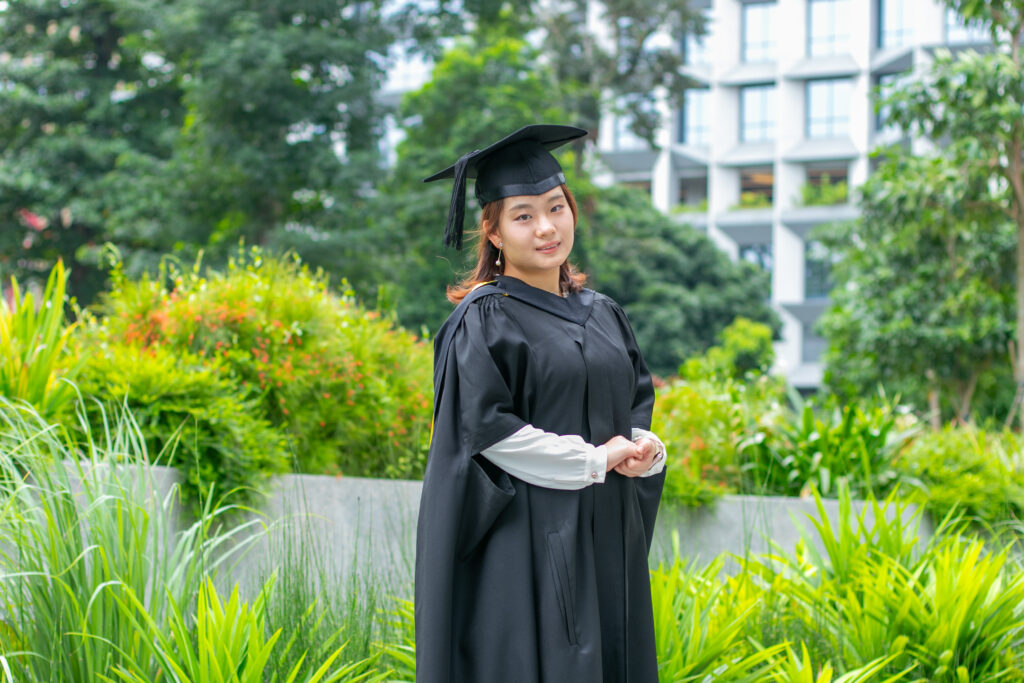
Receiving the Best Student Award came as a surprise to Zhang.
“I was deeply honoured and surprised. To me, this award recognises my overall capability in electronics and proves that all the hard work I invested throughout the programme was worthwhile. It also gives me great confidence as I continue my career in the semiconductor industry.”
Behind the achievement was a disciplined approach to learning. Zhang keeps highly structured notes, breaking complex topics into smaller concepts before organising them into a complete framework. Before examinations or interviews, she rewrites key ideas by hand to strengthen her understanding and memory.
When encountering unfamiliar concepts, she seeks explanations from professors, classmates and AI tools before reconstructing the knowledge in her own words.
However, she believes academic success is not simply about working harder.
“The most important skill is learning how to filter information—knowing what matters most and identifying the most effective path towards your goal.”
Outside work and study, Zhang finds balance through gym workouts, tennis and dancing. She also enjoys reading supernatural horror stories and listening to paranormal podcasts—an unexpected interest that reflects the curiosity at the heart of her journey.
Preparing for the Future
Zhang encourages future Green Electronics students to look beyond the classroom and choose opportunities that support their long-term goals.
“Internship can shape your future career. Don’t lower your standards simply because finding the right opportunity is difficult. Keep trying—opportunities will come.”
Her final advice reflects the thoughtful, step-by-step approach behind her own success:
“Manage your time wisely, choose opportunities that challenge you, and prepare for your future one step at a time. Sometimes, success also needs a little bit of luck.”
From entering an unfamiliar field to becoming the programme’s Best Student and building a career in the semiconductor industry, Zhang’s journey shows how curiosity becomes expertise: through consistent effort, purposeful choices and the courage to keep learning.
Interested in building a career in the semiconductor industry? Discover how TUM Asia’s 绿色微纳电子理学硕士 equips students with technical expertise, industry exposure and global opportunities to build meaningful careers in semiconductors and beyond.