
There is a particular kind of conversation that Suzy is highly competent in. A client arrives with a requirement that is half-formed, technical in places and vague in others. She listens, asks the right questions, and somewhere in the exchange, translates what they need into something an engineer can build and a business can justify.
“Clients often present complex or unclear requirements,” she says, but the learnings from SIT-TUM’s Bachelor of Engineering (Honours) in Electronics and Data Engineering have provided her with the analytical training to “break problems down into manageable components and propose technically sound, practical solutions.”
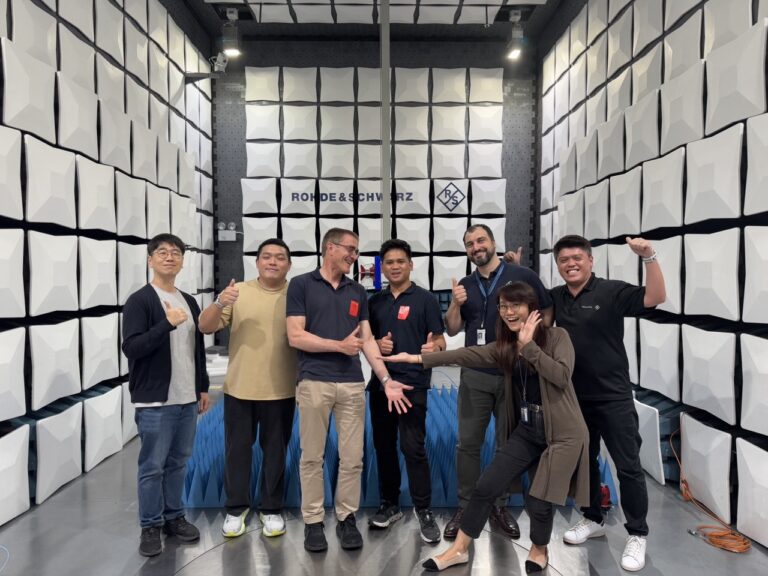
Suzy first started as an intern under the R&D division at Rohde & Schwarz Singapore, one of the world’s leading technology companies in Radio Frequency (RF) domains. She subsequently earned a full-time position as a Technical Sales Engineer in the Test and Measurement division upon graduating in 2024, and is currently at the Technology Systems division. Her role has allowed her to be exposed to engineering rigour and commercial instinct, and has steadily grown in scope since she first stepped into it.
The Same Tools, Different Terrain
What has changed is not the role itself, but the ground it covers. Suzy began with Electromagnetic Compatibility (EMC)-related solutions before expanding into Spectrum Monitoring and Radio Frequency (RF)-related systems. Different technical domains, client environments and vocabularies to get fluent in.
Each shift asked something new of her, and each time, she found herself drawing from the same foundation. The joint programme emphasised on fundamentals and “some modules felt very theory-heavy,” she admits. “But once I entered the workforce, I realised how important strong fundamentals are, especially when dealing with RF-related systems. They gave me confidence when discussing technical details with customers and engineers.”
“Confidence” comes up more than once when Suzy talks about her work. Not in loud ways but the steadier sort that lets you navigate unfamiliar technical territory and trust that your experience will hold. It’s less about having every answer and more about knowing how to work towards one.
When It Counted
It is the kind of confidence that is hard to manufacture and easy to underestimate until you need it. Not long into her career, Suzy encountered a project with compliance issues. She fell back on the systematic troubleshooting she had been trained in and was able to “identify potential root causes and propose structured mitigation steps.”
“It not only helped resolve the issue,” she recalls, “but also strengthened the client’s trust in our technical capabilities.”
That moment stayed with her because it showed that the programme had taught her beyond just engineering. It taught her how to think under pressure and move through ambiguity without losing her footing. That, she would come to understand, travels further than any specific domain knowledge.
The Network That Grows With You
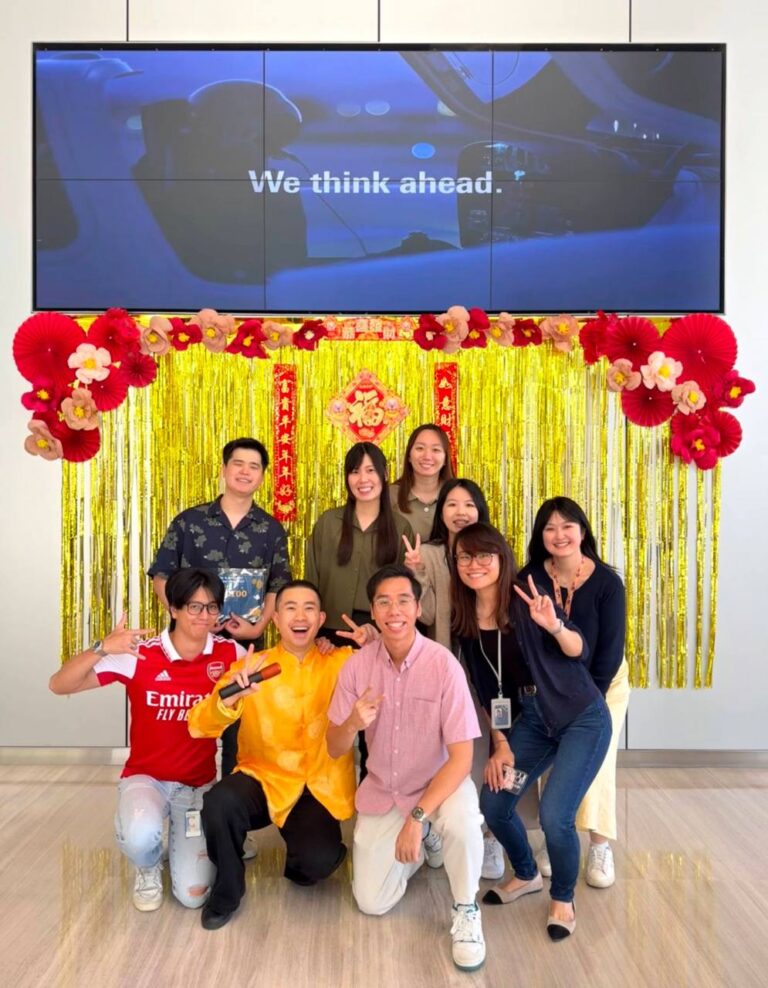
Alongside the technical grounding, there is something else Suzy has come to value. At Rohde & Schwarz, she found herself working with several seniors who had graduated from the same bachelor’s programme which “provides a shared understanding of technical standards and expectations,” she says. “It’s reassuring to discuss issues with those who have gone through similar training.”
Those conversations provided perspectives for her. Seeing how her seniors have each grown across technical, commercial, and managerial directions, has reinforced her own sense of what the foundation she was equipped can support.
“Career paths can evolve in many ways — be it technical, managerial, or commercial. Seeing how others have grown gives me confidence that the foundation from SIT-TUM’s [joint degree programme] is versatile and supports diverse career directions.”
That sense of shared identity runs deeper than professional utility. For Suzy, being a TUM alumnus means belonging to something with reach and responsibility. “It means being part of a global network of excellence and innovation,” she says. “Even years after graduating, I continue to uphold the TUM ethos of high standards and problem-solving in my professional work, striving to make meaningful contributions to my field.”
It is a reminder, she says, that the network does not diminish with time. If anything, it becomes more useful, richer with experience, and wider in reach.
Passing It On
Although still early in her journey, there is a purposefulness to how Suzy thinks about what comes next. Beyond her own career, she hopes to contribute to the community that shaped her.
“I hope to mentor younger alumni or students, participate in knowledge-sharing events, and help strengthen connections between TUM alumni and the local industry,” she says. Being a TUM alumnus, for her, is not simply a credential to carry. It is a standard to uphold and eventually to extend.
Her advice to current students is characteristic of how she approaches most things — grounded, forward-looking, and without shortcuts.
“Focus on mastering the fundamentals and not just passing exams. Build strong relationships with your peers and the alumni network as it becomes more valuable over time.”
The confidence she speaks of did not arrive all at once. It accumulated through each new domain she navigated, each client she worked through, each conversation with someone who understood what the role had asked of them. Not a single moment but the steady accumulation of many.