
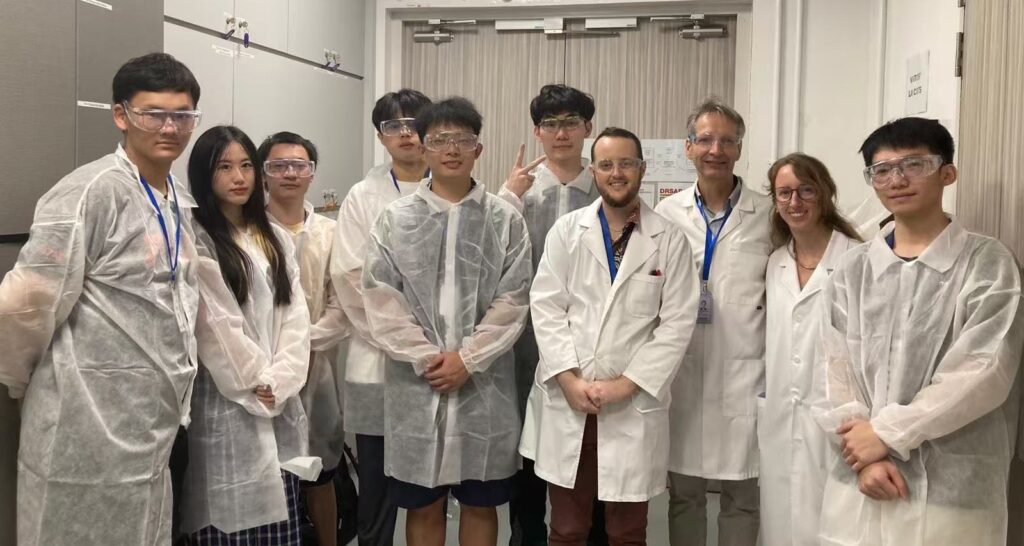
For many prospective students considering the Sustainable Food programme at TUM Asia, one key question stands out: What does the journey actually look like—from lectures to real-world experience?
We spoke with Yang Nengneng, a second-year student from the pioneer batch, to learn how she navigated her internship and shaped her career direction in food science.
Yang Nengneng, part of TUM Asia’s pioneer cohort for the Sustainable Food programme, is currently in her final year. Before joining TUM Asia, she completed her bachelor’s degree in Nutrition and Food Hygiene in China.
Her decision to pursue this path was driven by both ambition and passion: “TUM had always been my dream school, and I’ve always been interested in food science and human nutrition. The Sustainable Food programme felt like the perfect fit for me.”
As part of the pioneer batch, Nengneng and her classmates stepped into a completely new programme without guidance from seniors. While this came with uncertainty, it also created a unique advantage—the cohort grew closer through shared experiences, fostering a highly collaborative and supportive learning environment.
The small class size further enhanced this experience. With more personalised attention from professors, students were able to engage in in-depth discussions, build stronger academic relationships, and gain deeper insights into the field.
Students in the programme are introduced to internship requirements in their second semester, giving them ample time to prepare and explore opportunities.
For Nengneng, the internship search took approximately two months. She applied to around seven companies, focusing on roles aligned with her interest in sensory science, such as food sensory analyst and sensory scientist positions.
“Sometimes I didn’t get replies, but I didn’t feel discouraged. There are many applicants for the same role, so I treated each application as a step forward.”
Her persistence paid off—she secured an internship at the Singapore Institute of Food and Biotechnology Innovation (A*STAR), where she now contributes to a food sensory research programme.
Beyond classroom learning, TUM Asia’s strong industry connections played an important role in supporting students. Professors, many of whom are well-established in the food industry, provide exposure through industry visits and insights into potential career pathways. As part of the pioneer batch, Nengneng and her classmates also had the unique opportunity to work closely with professors while preparing for their internship search. This close interaction allowed them to gain valuable guidance and build meaningful connections within the industry.
From Theory to Practice
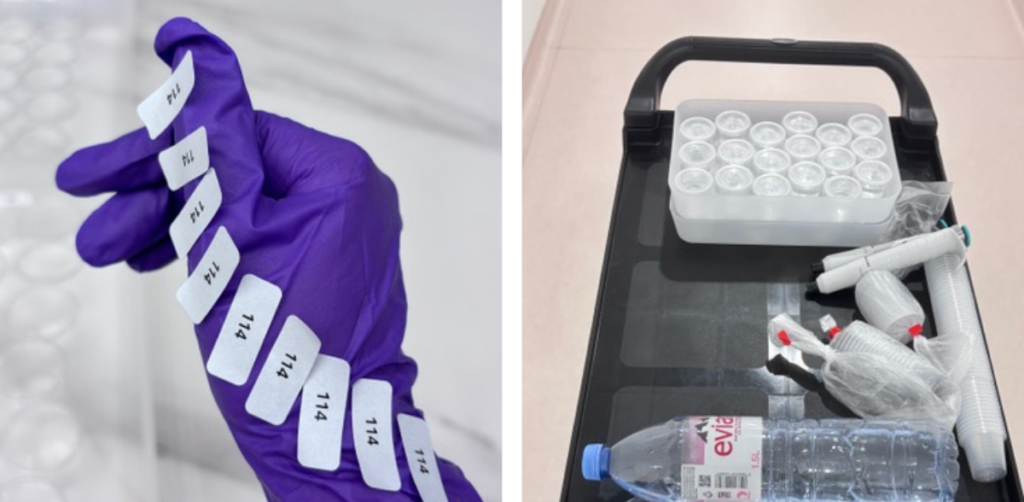
At A*STAR, Nengneng works as a research intern supporting food sensory projects, with a focus on bitter and umami compounds. Her responsibilities include training panellists for Taste Dilution Analysis (TDA) and designing digital sensory evaluation programmes.
Working at A*STAR has exposed her to a highly efficient and multicultural research environment, where collaboration is central to everyday work. Her team brings together colleagues from Singapore and across the globe, each contributing unique scientific perspectives that enrich discussions and drive innovation.
“Being at A*STAR taught me how to think collectively. Everyone shares ideas, and you grow by learning from each other.”
While transitioning from classroom learning to a structured research environment was initially challenging, she quickly adapted:
“At first, I felt uncertain, but once I got involved in a project, I became more confident. Just do it, and you will make it.”
“It was exciting to see how theory could be directly applied in a real company project.”
Overcoming Challenges and Growing Professionally
Adapting to the rigorous and structured environment of a research institute was one of Nengneng’s key challenges.
However, the support she received made a significant difference.
“My colleagues were very warm, and my supervisors were supportive and patient. They helped me a lot.”
Beyond technical knowledge, she emphasises the importance of initiative and curiosity:
“You need to be proactive—ask questions, find mentors, and keep learning. That’s how you grow.”
Nengneng’s internship experience also influenced her academic direction. She chose to align her thesis with research projects introduced by her supervisor at A*STAR.
“The research projects aligned perfectly with my interests and strengths. It allowed me to work on something with real-world impact.”
Advice for Incoming Students
For those beginning their journey in the Sustainable Food programme, Nengneng offers practical advice: