
How Sang Hyeok Kwon took the methodologies from his SIT-TUM bachelor’s programme into one of the world’s leading semiconductor companies and landed a permanent role doing it.
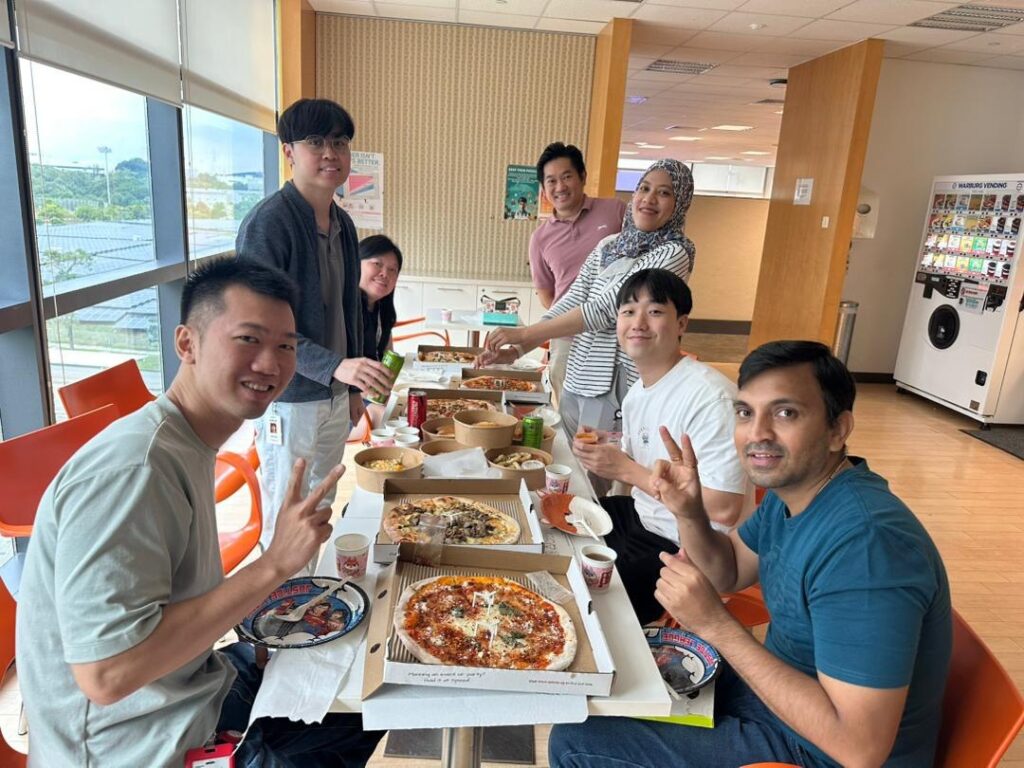
When Sang Hyeok Kwon joined Advanced Micro Devices (AMD) as an intern, he walked into one of the most technically demanding environments in the semiconductor industry. His role on the Static Timing Analysis (STA) team meant examining circuit timing reports, identifying timing violations, and working closely with design engineers to ensure chips perform correctly at target frequencies.
The problems were complex and the learning curve was steep but that did not discourage Sang Hyeok as his way of thinking was something that made a difference from day one.
The final-year undergraduate in Electronics and Data Engineering under the SIT-TUM joint programme chose his degree because he wanted the best of two engineering worlds. “TUM is a traditional leader in prestigious German engineering, and SIT is a rising leader in innovative, fast-changing engineering in Singapore,” he explains. “It was a great opportunity to learn from both.” What he didn’t fully anticipate was how deeply the programme’s approach to problem-solving would shape the engineer he is today.
The SIT-TUM curriculum pushed Sang Hyeok through rigorous theoretical foundations, deep diving into mathematics, electronics, and circuit design, before channelling that knowledge into project-based work that mirrored real industry conditions. This was the distinct yet harmonious teaching approach each institution brought to the programme. TUM professors, who flew in from Germany to deliver in-person classes, instilled the analytical rigour and precision that defines German engineering excellence. SIT brought its strength in applied learning and industry integration, ensuring that theory was always tethered to practice.
“Many modules were project-based, which meant we were not just learning concepts for exams but actually applying them to solve real-world problems,” Sang Hyeok recalls. “That combination was both intellectually challenging and practically meaningful.”
One module captured what that balance felt like in practice. In Sang Hyeok’s Internet-of-Things (IoT) project, he and his teammates built a smart vending machine from scratch. From the full cycle of defining requirements, designing the system, troubleshooting issues, and presenting results professionally. “Instead of just submitting theoretical calculations, we had to validate our designs and justify decisions with data,” he says. “Especially in modules that combined electronics with data engineering, we had to think about both hardware limitations and software optimisation, which closely mirrors how multidisciplinary engineering teams operate in industry.”

That foundation proved immediately relevant when Sang Hyeok stepped into AMD. Concepts from his circuit design fundamental modules stopped being exam material and became the daily language of his work. “They directly affect whether a chip functions correctly at a target frequency,” he says. “My semiconductor and electronics foundation help[ed] me understand why timing violations occur at a physical and circuit level, rather than just reading reports superficially. At the same time, the analytical and data-handling skills from my data engineering training help[ed] me interpret large timing datasets and identify patterns in failures.”
“This ability to connect theory with practical analysis has been one of the most valuable aspects of my education during my internship.”
It was this integrated thinking that caught the attention of his supervisor, Ng Pei Fern, Senior Manager in Silicon Design Engineering. What stood out to her was not just Sang Hyeok’s technical knowledge, but the discipline behind how he approached problems.
“What really impressed me early on was his thorough approach to understanding the complete problem context before jumping into solutions,” says Pei Fern. “When faced with a complex technical challenge, his first instinct was to frame the problem clearly — breaking it into manageable components, identifying constraints, and making assumptions explicit before exploring solutions. He was proactive in asking insightful questions, receptive to diverse viewpoints, and incorporated feedback quickly which significantly accelerated his learning.”
Over time, that careful, methodical approach evolved into something more agile. As Sang Hyeok accumulated domain knowledge and context, his structured thinking translated into quicker judgment and greater confidence in navigating ambiguity. “He became more comfortable weighing trade-offs, anticipating potential issues, and proposing practical solutions that considered real-world constraints,” Pei Fern notes. “I see him ready to take on more complex and larger-scope tasks.”
“His first instinct was to frame the problem clearly — breaking it into manageable components, identifying constraints, making assumptions explicit before exploring solutions.”
— Ng Pei Fern, Senior Manager, Silicon Design Engineering, AMD
For Sang Hyeok, the transition from student to professional also brought a shift in mindset. “In school, the goal is often to arrive at the correct answer. In my current role, the focus is more on efficiency, feasibility, and learning from each other,” he reflects. “It has made me more proactive in asking questions and seeking clarity which is crucial in a real-world engineering environment.”
That technical, analytical, and professional growth culminated in a permanent role offer at AMD. Sang Hyeok credits not only his preparation but the team culture that allowed him to apply it. “The team consistently encouraged questions and open dialogue. Discussions never felt like a one-way question-and-answer session, they felt like collaborative learning sessions where everyone contributed and learned together.”
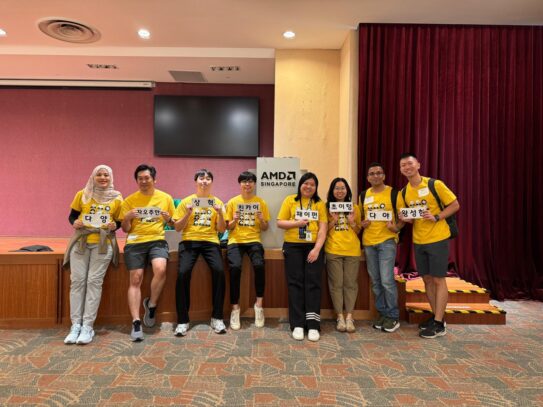
As he prepares to graduate this year and transition into a full-time role at AMD, Sang Hyeok looks back with a clear sense of what the SIT-TUM experience gave him. The ability to bridge traditional engineering principles with modern, data-driven approaches.
Beyond curriculum, he also steps into TUM Asia’s global alumni network, a community of engineers, innovators, and leaders spanning industries and regions. “The international exposure from studying in a joint programme has broadened my perspective,” he says, “allowing me to adapt to different working cultures and environments.” That adaptability, alongside our global alumni network, is something he sees as a lasting asset in his career path.
When asked about what he is most proud of in his educational journey, Sang Hyeok cites his growth. “Being an international student in a rigorous joint programme challenged me to step out of my comfort zone. Completing this programme while gaining industry experience has shown me that I can adapt, learn continuously, and contribute meaningfully — and that is something I am truly proud of.”